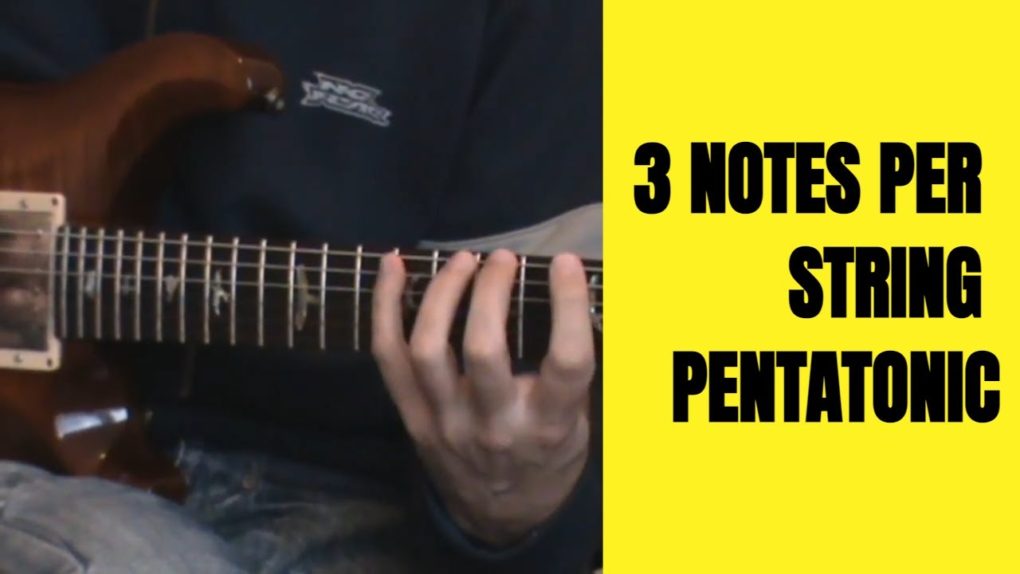
Throughout the last few years, every time I learnt a new chord I always tried to associate the right scale to cover that same area. Watch the video and you’ll understand what I mean.


Throughout the last few years, every time I learnt a new chord I always tried to associate the right scale to cover that same area. Watch the video and you’ll understand what I mean.
Yesterday I posted this video lesson about 3NPS Pentatonic so today I wanted to share the 5 shapes/fingerings. I hope you understand the process of how to build these and how to use them (again, watch the video if you don’t). Good Luck.
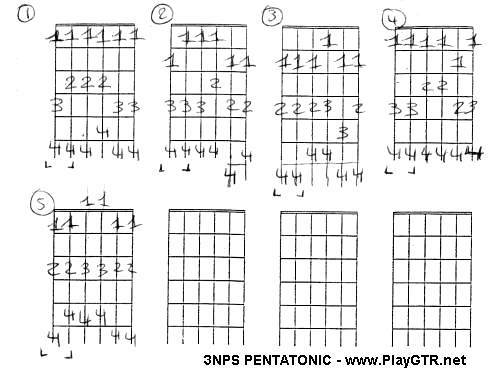
I have always been inspired by lines played by funk sax players like Sanborn, Marienthal o Brecker, lines which are unique because of the characteristics of the instrument to produce the same note with two different fingerings (but this is possible on the guitar,too), together with their aggressive feel and a bluesy approach (= pentatonis, bends…). In this post you will find the fingerings for pentatonic scale three notes per string in position (to get the “false fingering” feel) and three notes per string trough the neck, to get fast and smooth lines.
As a self-promoting musician I have learnt the hard way that time is a precious commodity. Being organized is of paramount importance if you want to dedicate only the necessary time to the boring and repetitive promotional stuff and concentrating on what is more important: your music. So I have learnt to keep a “Press Kit” folder on the desktop of your computer. It won't take you long to put it together, and you'll be able to use it every time you need it.
This will contain:
1. Samples of your music:
At least 3 full tracks from your latest album ready to go. Also I have found handy 3-4 shorter 30 sec samples of your best tunes that are quick to attach and email.
Make sure your MP3's are fully tagged (use this: http://www.mp3tag.de/en/) and the files contain your name, song title and site:
ARTIST_NAME_SONGTITLE_www_ArtistName_com.mp3
2. Pictures:
A few small, medium size and a high-res picture of you (must be great professional promo shots!), a pic of your logo or band logo if you have one, and album artwork (again in 3 sizes) of all your discography.
3. A well written and appealing biography written in different lengths:
– Long version with a lot of detail of what you have achieved in the past, and your vision and goals for your career.
– Medium version – two or three paragraphs, this is usually what you see on the Net in a Bio page.
– Short version 1 paragraph…it must be great, appealing…imagine one paragraph that contains your bio and your vision.
– One-liner – one compelling line, that must say everything about you and your music.
4. Press and quotes from reviews:
Scan anything meaningful that you have in terms of press and appearances on magazines and newspapers, plus one big page/file (like a word file) were you summarize your press
and best quotes from these articles. Put in there endorsements and anything that people said about your music (even comments on your Myspace page if you think they are great!). Think outside the box here.
5. A Links page:
A document (again a word doc or plain text will be fine), where you have all your important web links (Myspace, twitter…) ready to be copied and pasted anywhere.
6. Showreel
If you plan to put this material on line (and make it into a EPK or electronic press kit) I suggest you to have a showreel ready, make it a mashup of performances, pictures slideshow with your music in the background, and the odd interview section where you talk about yourself and your music in first person.
In a few words, any time somebody requests something to do with you as an artist, think 'will I need that again?' if the answer is yes, make sure you leave a copy in this 'press kit' folder on your desktop. And if you are out of inspiration, just browse the web and don't try to copy, but try to improve what you see and like in other artist's pages.

Thank you to all of you that downloaded and sent positive feedback about my Guitar Kit in the past year. I have uploaded a new and improved version. The main reason to upgrade is so that now it is all at 300dpi (print quality) and all the layouts are more consistent. Also, it is now a single PDF file (I am sure your computer will have Adobe Reader), much easier to navigate and print.
Make sure you read the ‘legal’ and ‘printing tips’ in the Read Me file!
Join our mailing list today to start enjoying exclusive content. Not only you will get The Guitar Kit free, but more exclusive lessons.
I hate spam as much as you do and will never sell or give your information to anybody. I send a message out once a month (if so!). After you entered your details in the form below, you will receive a confirmation email and a separate email with the download link.
Printing tip:
When printing make sure you tick the ‘fit to page’ box in your printing options, so that all these templates will show correctly on any paper size. The ‘Scale Fingerings’ will print best in landscape format.
Legal:
Feel free to pass on these templates, or use them for private studies or teaching. You don’t have the rights to modify these templates in any way, to remove the TrueGuitarist.com logo, or for commercial use. For any enquiries get in touch: Visit the Contact Page
Contents:
STAFF PAPER:
• EMPTY STAFF TEMPLATE
• TREBLE CLEF STAFF+TAB
• TAB ONLY
• GUITAR NECK BOX
CHORDS:
• BASIC CHORDS CHART
• 7TH CHORDS (maj7, m7, 7, m7(b5))
SCALE FINGERINGS:
• PENTATONIC SCALE/ BLUES SCALE (5 SHAPES)
• MAJOR SCALES (5 SHAPES)
• MAJOR SCALES 3 NOTES PER STRING (7 SHAPES)
• MELODIC MINOR (5 SHAPES)
• HARMONIC MINOR (5 SHAPES)
• WHOLE TONE – DIMINISHED SCALE
EXTRAS:
• HARMONICS CHART (PDF)
• MODES OF C MAJOR (PDF)
• MODES OF C MAJOR, PARALLEL APPROACH (PDF)
All © Gianni Chiarello – www.TrueGuitarist.com
If you find ‘THE GUITAR KIT’ useful (and I am sure you will) consider making a donation so I can keep adding free lessons and products for you all to enjoy! Use the DONATE button on the right of the screen at www.TrueGuitarist.com to make a donation safely through Paypal.