Category: Tips and Online finds

How to make guitar pedals – From a kit.

In this post I want to show how to put together a guitar pedal if you have basic soldering skills and basic knowledge of electronics. With this I mean recognising different components, knowing what’s the correct orientation of diodes and electrolytic capacitors and being able to read a basic circuit just in case there is some troubleshooting to do.

To start with I will show how to put together a pedal from a Kit.  There are a lot sites out there that sell kit will all components and also offer a pre-drilled enclosure. Probably the most famous is BYOC, but as I said there are quite a few that not only offer original designs, but also clones of popular pedals (like in this case).

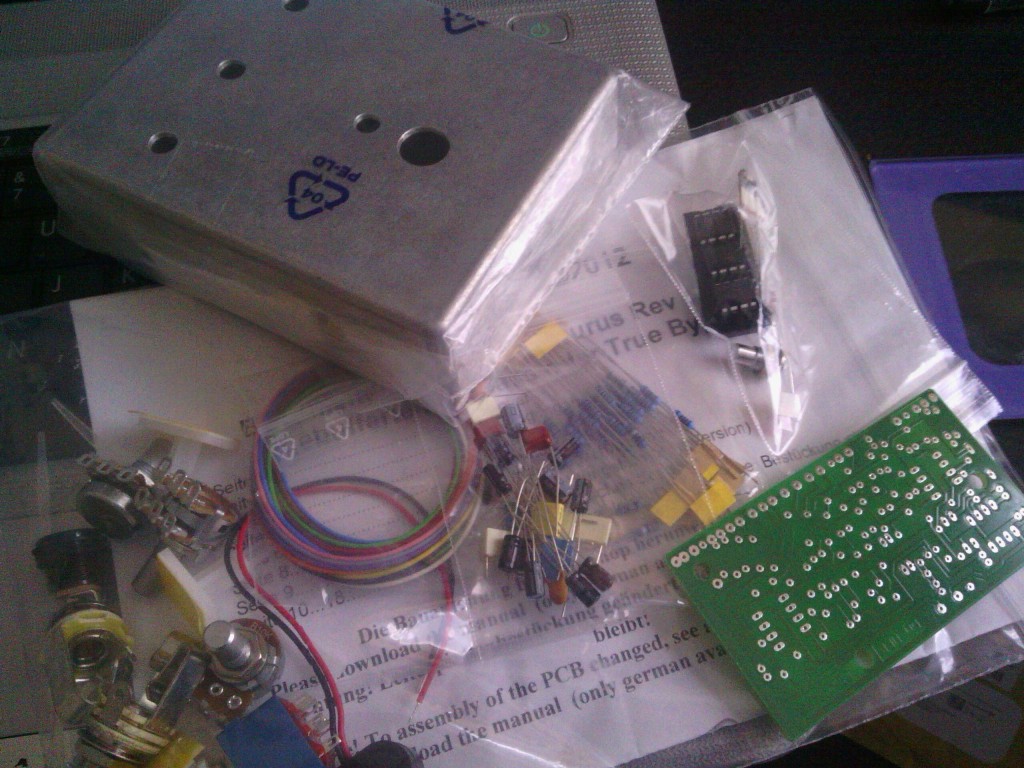
This is what I received in the post a few days after ordering from a German website.
IMG_20130112_101250

As you can see all components are separate, and before you start I definitely advice to read all instructions! In this case I found out that you could follow two separate sets of instructions, one for true bypass and one for a buffered version. All instructions were in German which did not help…!

A trick I have learnt to speed up the process is to identify all resistors and capacitors by taping them on the ‘bill of materials’ page like in the picture below.
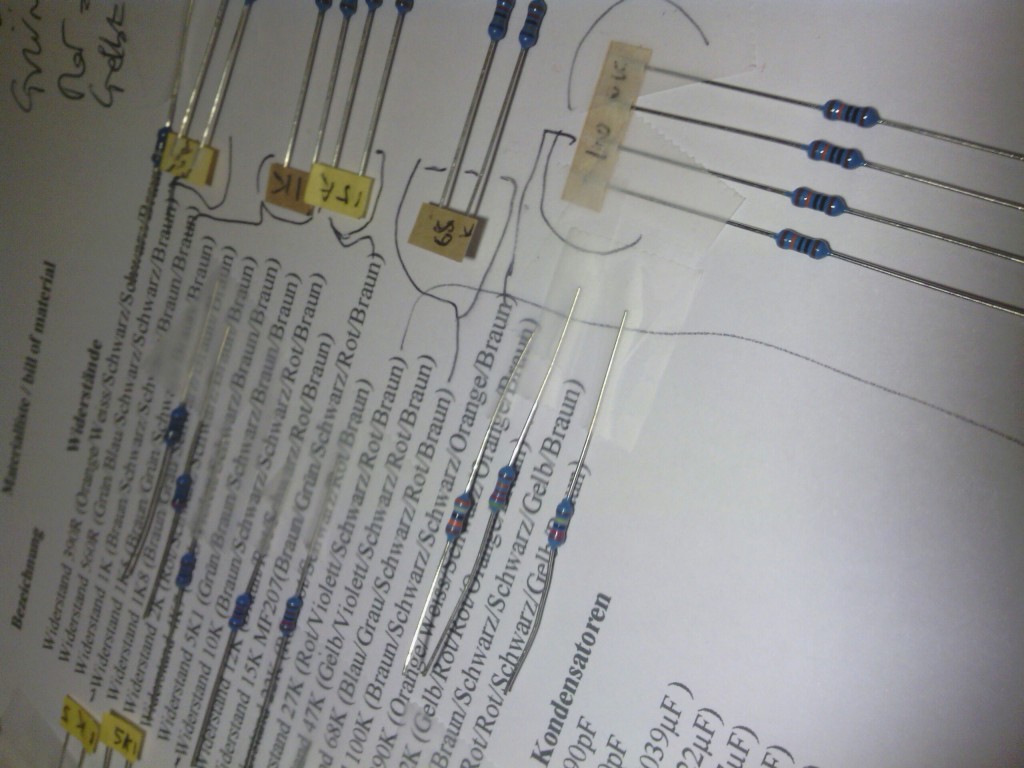
IMG_20130112_154142

This makes things much easier when you will start populating (soldering components onto) the PCB.

After that I started to look into soldering components to the PCB, I decided to go for the buffered version, as this particular overdrive had a famously great sounding buffer section. I am not a fan of buffers, but I was curious to test it out. It can always be converted to true bypass with some small modifications.

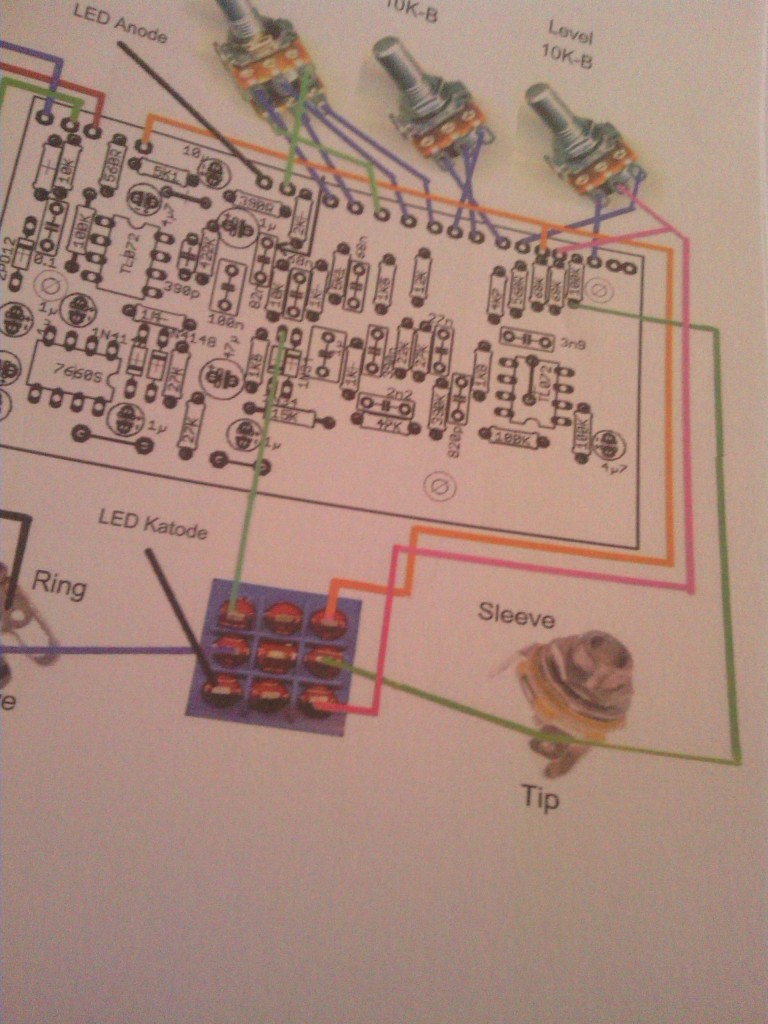
The layout is intended to match the ‘plain’ side of the PBC facing you, the one without the exposed metal circles, to be clear.
IMG_20130112_143255

So this is what should be in front of you before you start soldering.
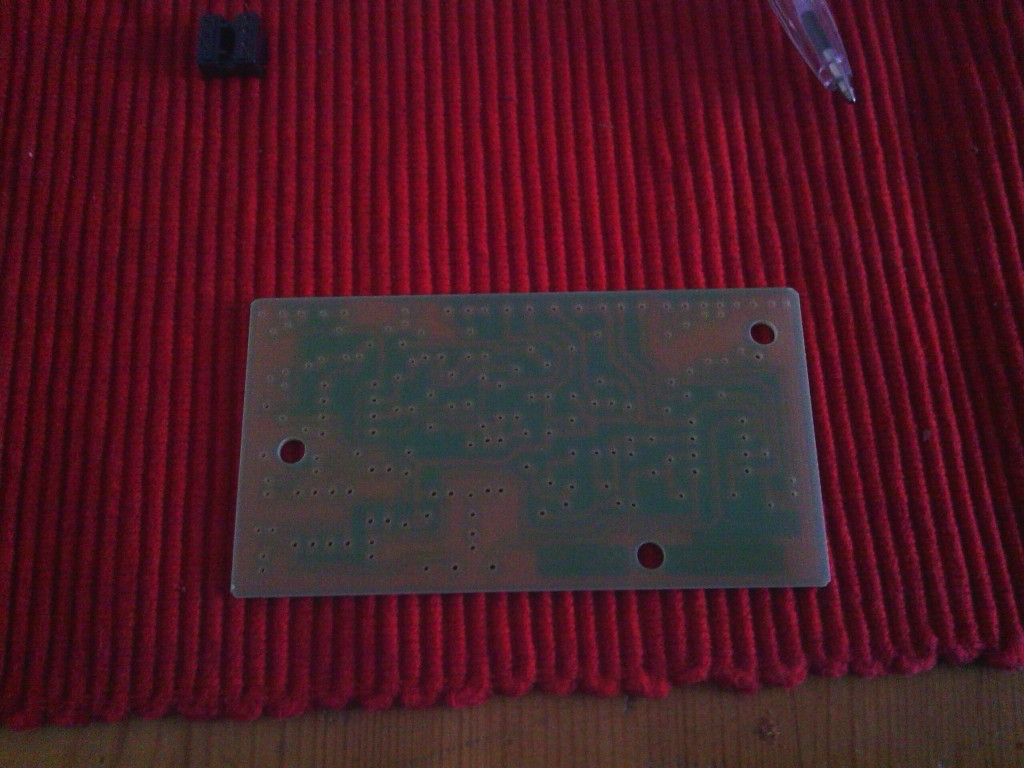
IMG_20130112_143339

Next I started soldering all resistors onto the board and the IC sockets.
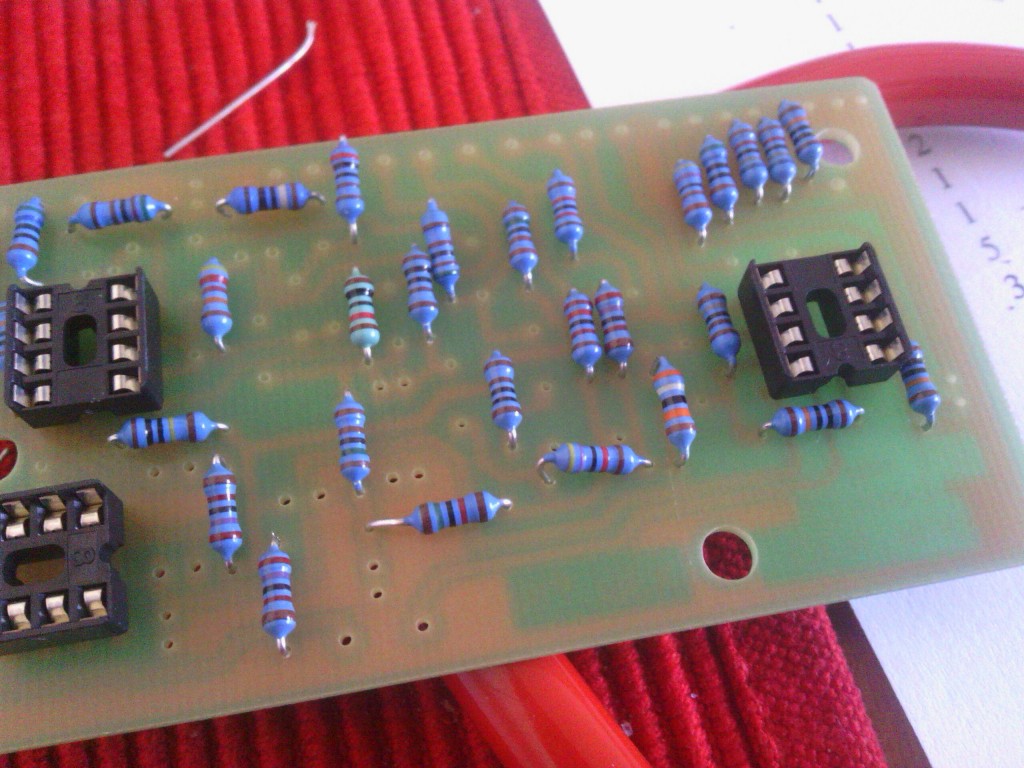
IMG_20130113_101852

Following that all Diodes and Elect Capacitors. Make sure you pay attention to the orientation of these two types of components. Diodes have a black band that needs to be on the correct side and Capacitor have the negative side marked usually by a different coloured band. This will all be marked on the PCB layout or on in the circuit.
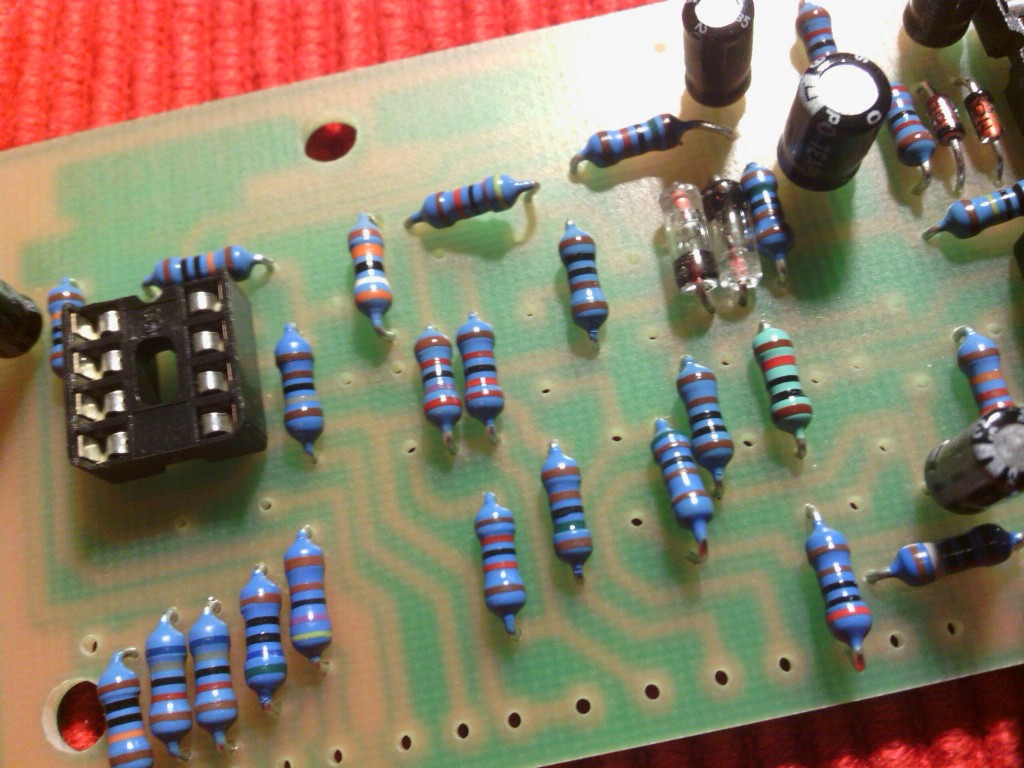
IMG_20130113_172539

Next you will solder all remaining capacitors and slot the IC’s onto the sockets.
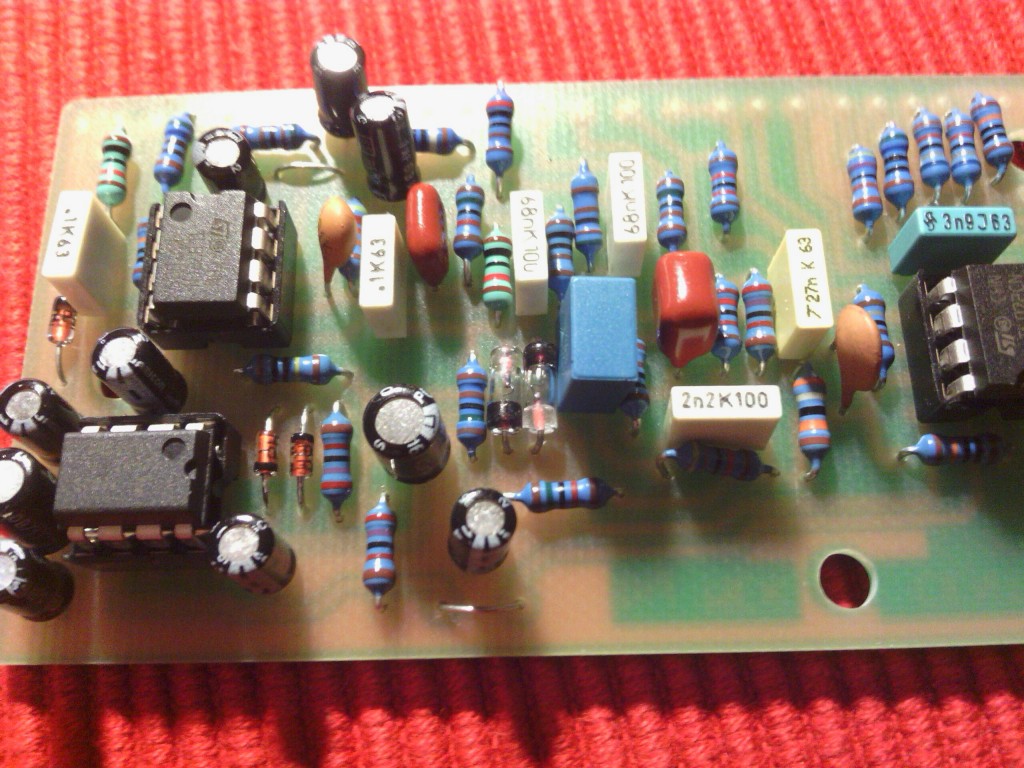
IMG_20130113_183229

Almost there! Next you want to screw the potentiometers, jacks, foot switch, led holder and power socket on the enclosure. Sometimes (like I found out later in this case) it is better to wait to fit the potentiometers to the box, as it might make them easier to solder to the PCB.
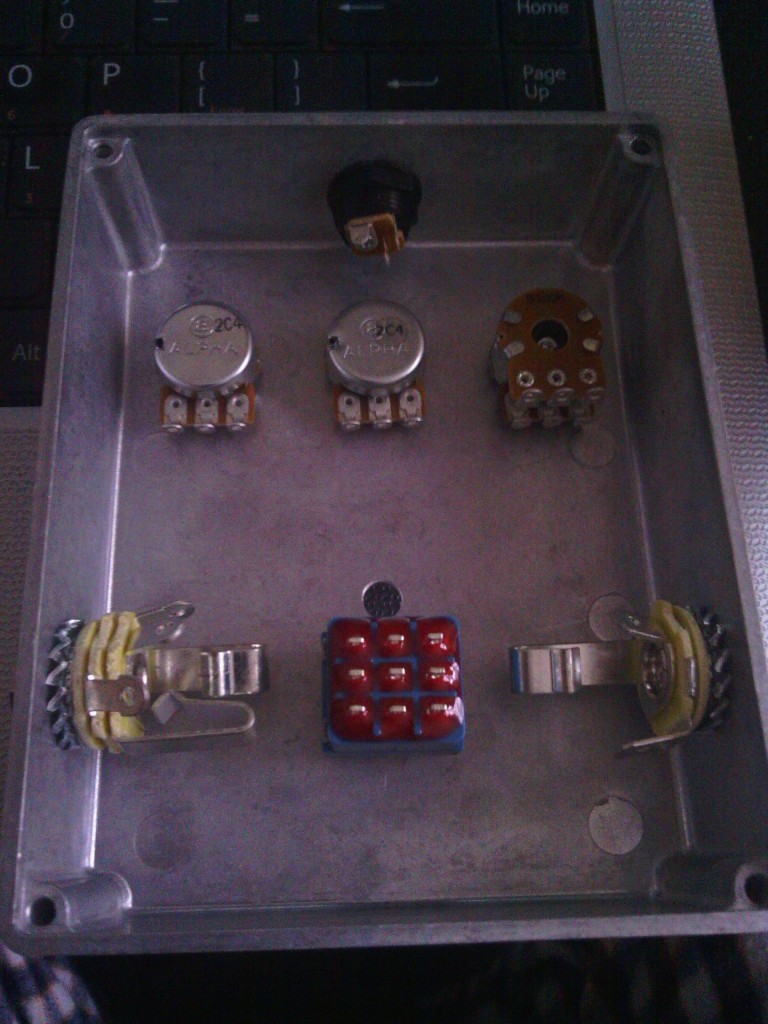
IMG_20130112_104810

Before screwing all things onto the box I had applied the decals onto the front of the enclosure, I did this by using waterproof inkjet printable adhesive vinyl. It is an easy option and I found it lasts quite a bit without having to powder coat the boxes or having to spray paint them. Also you can use a regular printer which makes for potentially very creative artwork. I opted for a very basic and clear layout, but if this pedal makes it to my board, I will make it more interesting to look at!
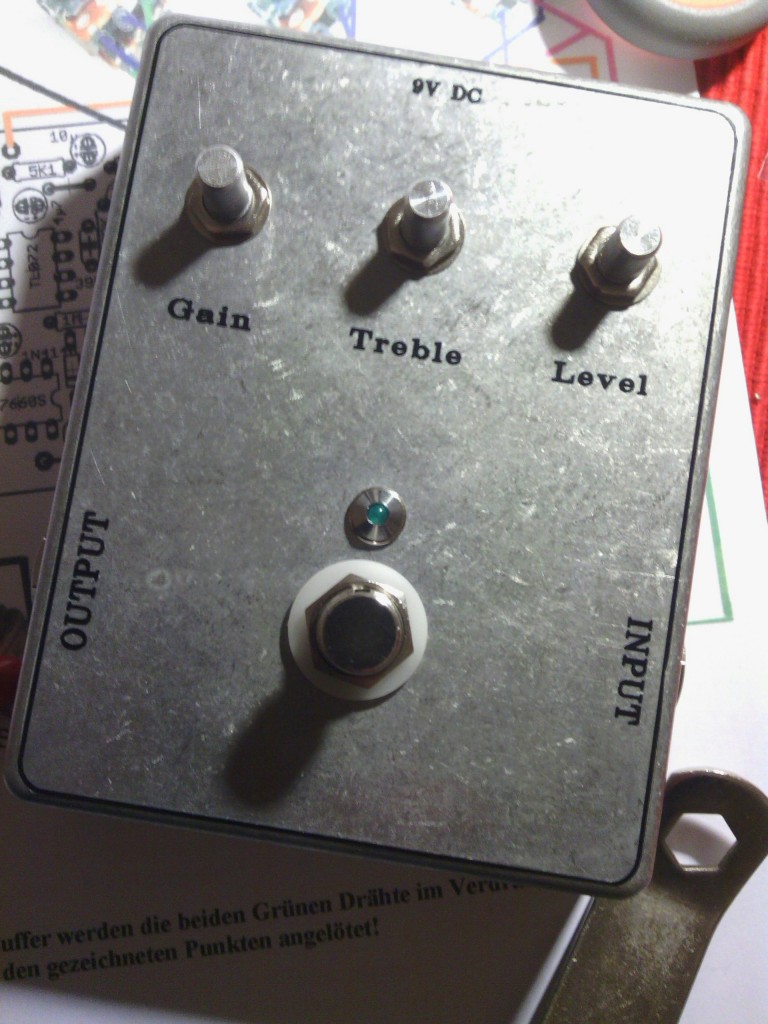
IMG_20130113_194017

You can now start soldering the leads to the input  output and power section. This will all be shown in the main layout on the instructions.
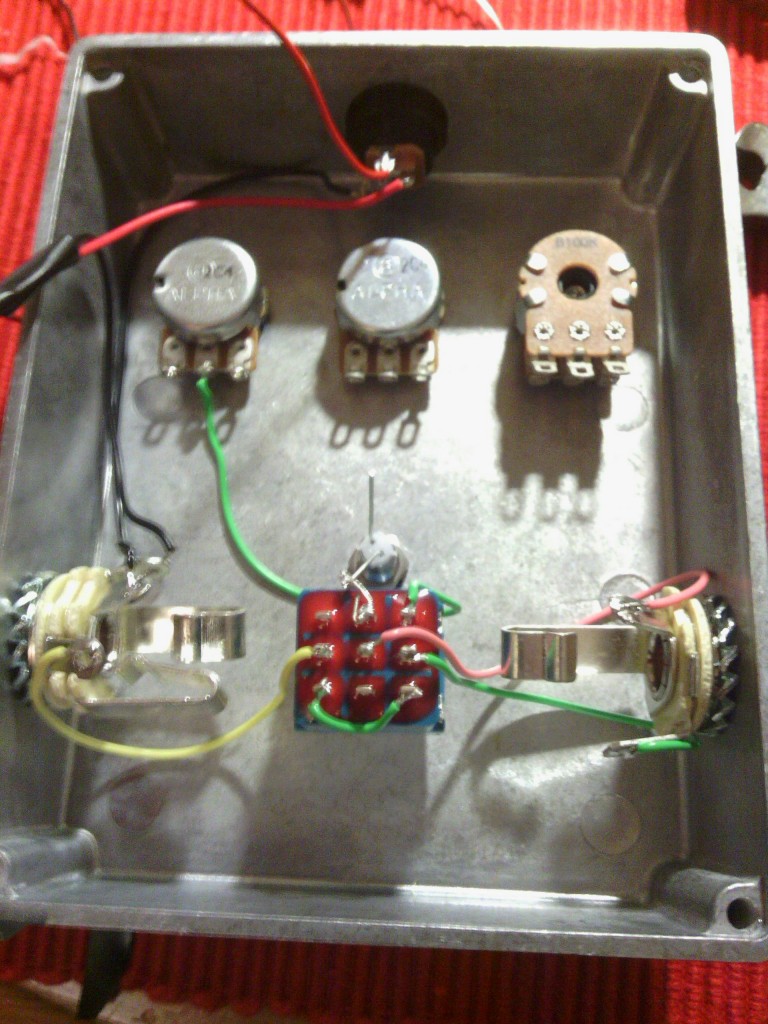
IMG_20130113_203827

At this point I will connect the PCB to the potentiometers and in/out/power connections.
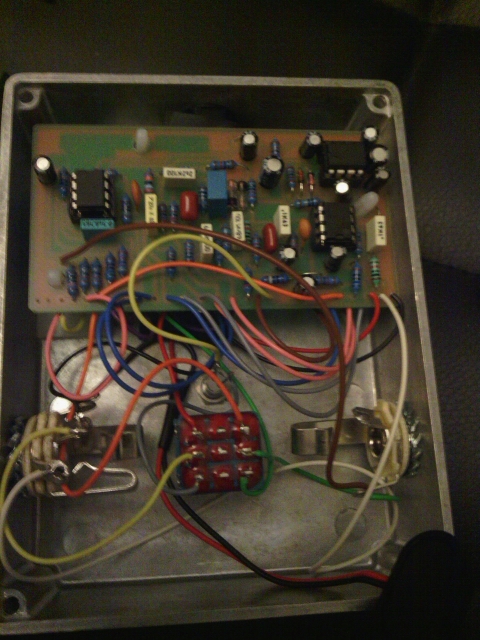
IMG_20130114_174839

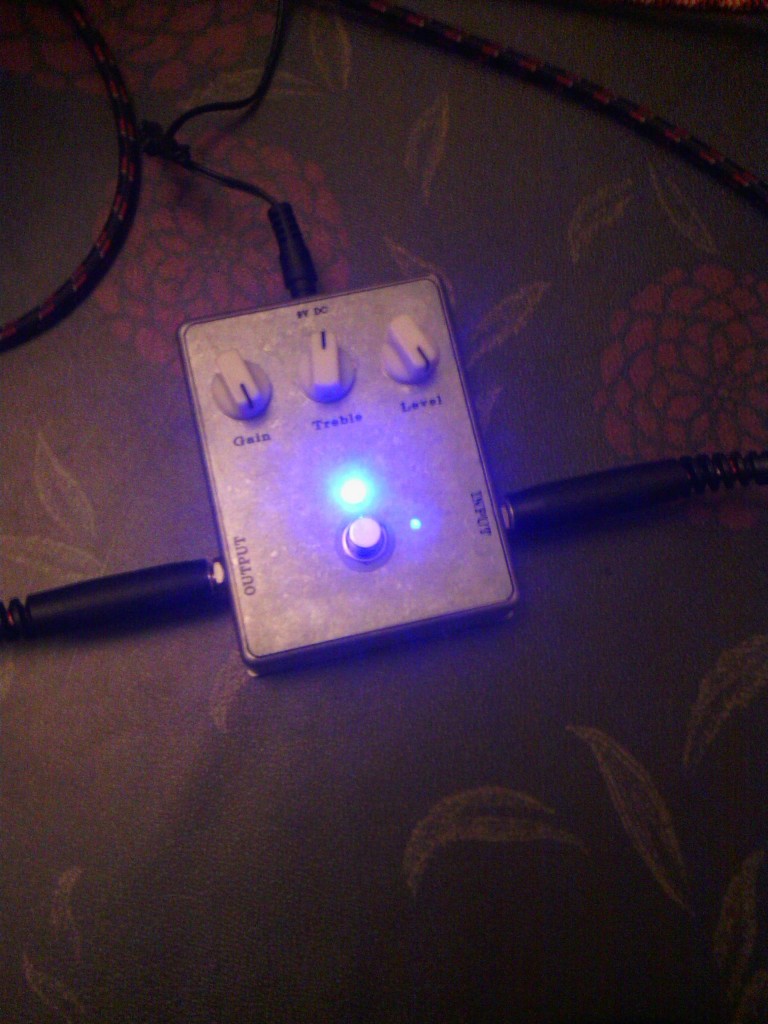
I will tidy up all the wires later, I just want to find out if it all works OK or it needs some troubleshooting. Luckily it all work fine, and it sounds great. Below the picture of the finished product in action!
IMG_20130114_180424


Thoughts on Guitar Amp live EQ Settings

I play a lot of gigs of all kinds and styles of music , as I always enjoyed doing that. I always considered myself a bit of a ‘session guitarist’ always trying to ‘fit in’ rather than ‘stick out’. When somebody approaches me at the end of a gig and says  how well I complemented the band and ‘blended in’, I feel I have done my job.

So I wanted to do a post on what I think a lot of guitarists out there get wrong…remember this is my opinion!!

First of all: you need to  find a balance between what is a volume/tone/sustain that is both comfortable and inspiring for you but not overpowering and intrusive for the other band members.

A good approach is to CUT rather than to BOOST on your amp’s EQ section. Unless you are playing on the same stage every night, every room will make your amp sound different. So I always start from all EQ on 12 o’clock and start cutting what I feel makes my tone muddy. Usually…bass!! I always hear too much bass coming from guitar amps. That’s the bass player’s realm.

Cutting frequencies will also allow me to turn up the volume more, which is always a good thing for tone…we all know that! 🙂

A slight boost in the midrange area might help you ‘cut through’ when needed.

I own different amps, but my go-to amp for medium size gigs is a modified Fender Hot Rod Deluxe with a Vintage 30 speaker.  Unless you play metal, there is enough in there to make everybody happy at any gig, and not break your back carrying it around. It’s not an expensive amp, and I have seen even Mike Landau use them live and great some great tones…so if it is good enough for him…

Even though ‘all knobs all the way up’ might be  a good setting to record a rhythm part in a studio, this might make your tone clearer and fuller:

Then again…use your ears!! All I mean to say here is try to think like a sound engineer mixing a band rather than just to make your guitar sound bigger.

A last thought: learn to play with a lighter touch. Too many guitarist pick too hard all the time. Let the amp do the work for you, and ‘dig in’ when you need that extra kick or break-up. All my favourite guitarist in terms of tone just about touch the strings with their picking hand.

Suggested Reading:

Guitar Tone: Pursuing the Ultimate Guitar Sound

Nile Rodgers Masterclass

Following the theme of master classes from legendary guitarist today I am going to share with you this great video where Nile Rodgers delivers some great funk guitar playing.

Amazing stuff, great quality video as well, very clear and quite easy to follow!


30 Days to build a habit

This is something I have known for years, but I have just started implementing with great results. It works wonders if you are having a hard time making a start on things and you are, like myself, a procrastinator. After all we are creatures of habit and all we have to do is allow the time for a new habit to be formed, until it becomes part of our routine.

It takes 21 consecutive days to form a habit, and about 30 to make it become part of your routine. Start with something generic, like ‘I will practice for the next 30 days every day’, to go to something more detailed like: ‘ I will practice  every day for and hour the next 30 days’, or  ‘I will practice transposing one tune a day for the next 30 days’ or  ‘I will practice to learn major scales for one hour for the next 30 days’.

Just do it, do not be to harsh about it, and you’ll see great results. Make sure you stick to it, don’t give yourself a choice! This is great also to remove negative habits, like ‘I will not judge my playing negatively for the next 30 days’ or ‘I will not ‘noodle’ for the next 30 days’ or ‘I will stretch and correct my posture before I play for the next 30 days’

Watch this great video from Ted.com, you can apply this concept to everyday life.

All you have to do is to make a 30 day calendar to to keep track of your progress, and tick a box once you have achieved the result. I use this great little template from this page (the article is definitely worth a read):

http://andrewdubber.com/2010/03/30-days-of-ideas-05/

I like to print a few an a A4 page and mark the starting date on each 30 day calendar. Most times, I find myself continuing with the new habit after the 30 days without having to keep track.

Good Luck!

Posture, Warm ups, Stretching and Health for the Working Guitarist.

As a working guitarist, sooner or later you will be confronted by tension in your upper body and shoulders. I always try to teach to all my students how to avoid tension and explain how warming up before a session/gig and sitting/standing correctly can make a huge difference in how you will feel at the end of it.

We always forget how playing an instrument, lifting gear, or sitting all day to practice or teach can be a physically demanding task, and I don’t know any athlete that does not warm up before a performance, so why shouldn’t we?

The following is a great video that explains how things work in the upper body:

This is a great set of warm ups and massages by guitar master J. Petrucci:

If tension should arise, a great way to release is explained in this video:

I hope this was helpful, feel free to add a comment below if you find more useful videos!