“Mastering Jazz Soloing: Breaking Down ‘Bright Size Life'”

In this blog post, we’ll dive into the art of soloing over jazz standards, focusing on the classic tune “Bright Size Life.” Known for its ECM-era 70s jazz style with suspended sounds and modulations, this piece offers an excellent opportunity to explore creative soloing techniques. Join us as we break down the chords, discuss scale choices, and learn to connect them seamlessly.

  1. Understanding the Key and Chords:
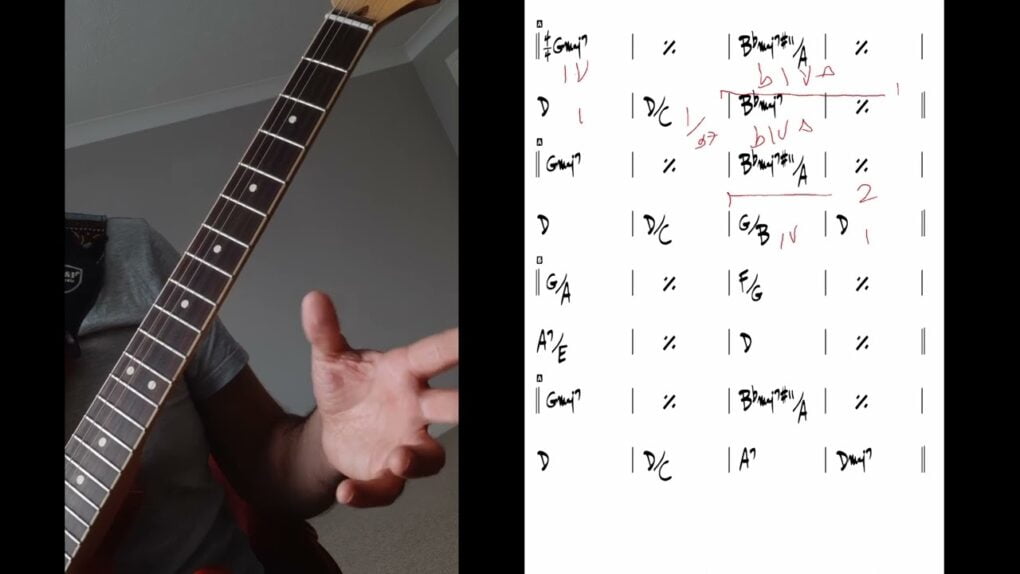
    “Bright Size Life” is set in the key of D major. The chord progression begins with the IV chord (Gmaj7), moves to the bVI major 7 (Bb Lydian), and then resolves to the V chord (A7) and back to the I (Dmaj7). The bridge section introduces a series of constant structure chords and a V-I progression.
  2. Scale Choices for Soloing:
    To effectively solo over these chords, it’s essential to select appropriate scales. I recommend using D major (Ionian) over Dmaj7, Bb Lydian (flat six major seven) over Bbmaj7#11, and D Mixolydian over D7. These scales complement the chord tones and provide a solid foundation for improvisation.
  3. Expanding Your Vocabulary:
    While understanding scales is crucial, developing a unique and expressive jazz vocabulary is equally important. I demonstrate how to connect the chords by using phrases and licks within a modern jazz style. I learning from other jazz players and incorporating these ideas into your playing.
  4. Transposing to Different Keys:
    To enhance versatility and adaptability, it’s advisable to practice the tune in various keys. The blog post provides an example of transposing “Bright Size Life” to the key of G major, encouraging readers to explore different tonalities and apply their knowledge across the fretboard.
  5. Playing with Singers:
    For musicians interested in collaborating with vocalists, being adept at transposing is invaluable. Singers often have different ranges, and altering the key can accommodate their vocal abilities. Developing this skill broadens your opportunities as a jazz musician and enhances your overall musicality.

Conclusion:
“Bright Size Life” offers an exciting canvas for jazz musicians to experiment with improvisation and soloing. By understanding the chord progressions, selecting appropriate scales, and expanding your jazz vocabulary, you can create captivating solos that complement this classic jazz standard. Moreover, mastering transposition adds another layer of skill, allowing you to collaborate seamlessly with vocalists and fellow jazz musicians. So, take your time to explore the nuances of “Bright Size Life” and embrace the journey of becoming a versatile and expressive jazz soloist. Happy playing!

Yamaha A3M: Old is gold! Is the Revamped Version a Worthy Successor?

Hey everyone, today I want to share my experience comparing two incredible acoustic guitars from Yamaha’s A3M series. Having owned the old version for over a decade, it has been my loyal workhorse, perfect for gigs and long hours of play. But curiosity got the better of me, and I couldn’t resist trying out the revamped version to see if it could live up to its predecessor’s glory.

Let’s start with the old version. What drew me to it initially was its alluring vintage look, reminiscent of classic guitars. What set it apart was the thin electric guitar neck, which made playing for hours a breeze, especially during those jam-packed gig days. The preamp setup was a winner for me, boasting three types of microphones and a tuner. This combination resulted in a realistic and rich sound that truly stood out among other acoustic guitars.

The revamped version, on the other hand, featured a slightly different design both internally and externally. The bracing changes gave it a fatter sound, which was appealing in its own way. However, there were some trade-offs. The tuner was missing, and the preamp turned out to be noisier, with a peculiar honky resonance that was hard to ignore. Visually, the revamp went for a more modern look, akin to guitars from brands like Taylor.

Both guitars come with padded gig bags, making them ideal companions for musicians on the go. They are both affordably priced, being manufactured in China, but there is also a pricier Japanese version available.

As a musician, my focus has always been on live performances, although I do some recording too. For those who prioritize recording, the revamped version might be the better choice due to its improved acoustics. But for live players like me, who rely on plugging straight into the PA or front-of-house system, the old version truly shines.

Ultimately, choosing between the two depends on your musical preferences and needs. The old version, with its vintage charm and reliable preamp setup, works like a charm for live gigs and performances. And as it has been around for quite a while, you might even find it at a more budget-friendly price nowadays.

On the other hand, the revamped version has its appeal with the fatter sound and sleek design. If recording is your primary focus, it might be worth giving it a shot.

To sum up, both guitars have their merits, and it’s challenging to declare one as outright better than the other. They each cater to different musical requirements, so the choice ultimately falls upon the type of musician you are. I hope my experience with these Yamaha A3M guitars helps you in making an informed decision.

Why you need a Boss Super Octave OC-3!

Title: Why the Boss Super Octave OC-3 is a Must-Have for Your Music Setup!

If you’re a musician looking to enhance your sound and explore new possibilities, then the Boss Super Octave OC-3 pedal might just be the perfect addition to your setup! In this blog post, we’ll delve into why this pedal is a game-changer, especially for duo performances in genres like Funk, Pop, and even Jazz.

The Boss Super Octave OC-3 pedal is a versatile tool that brings new life to your guitar and bass playing. It is designed to fatten up the lower end of your sound, adding depth and weight that is perfect for certain musical styles. While it might not always be suitable for organic and acoustic sounds, it truly shines when used in genres like Funk and Pop or when you want to spice up your bluesy tunes.

The Three Modes:

This pedal comes with three distinct modes, each offering unique octave effects:

  1. Drive Mode: This mode provides some saturation, ensuring your original sound remains unaffected. It’s excellent for when you want to add just an of octave without altering your core tone.
  2. Octave 2 Mode: In this mode, the pedal introduces a sub-octave effect, two octaves below the input signal. Bass players often use this mode for modern R&B and Drum and Bass grooves, providing that deep, rumbling foundation to the music.
  3. Polymode: This is where things get interesting! The Polymode allows you to split the frequency spectrum at a user-defined value, selectively adding an octave down to specific strings. This mode opens up new possibilities for fingerpicking, basslines, and even unique chord voicings.

Perfect Companion for Duo Gigs:

The Boss Super Octave OC-3 truly shines in duo performances. If you’re playing alongside a singer, saxophonist, or another instrumentalist, this pedal can be your secret weapon to create a fuller, more dynamic sound. It’s a great addition for R&B, Funk, Pop, and even Jazz duos, where the low-end weight and presence can make all the difference.

Acoustic Guitars and Beyond:

Not just limited to electric guitars and bass, the Super Octave OC-3 can also work wonders with acoustic guitars. It adds a touch of that acoustic bass vibe, bringing a new dimension to your acoustic performances. However, it’s worth noting that this effect works best with fingerpicking and specific basslines rather than strumming.

Conclusion:

In conclusion, the Boss Super Octave OC-3 is a must-have pedal for any gigging musician looking to explore exciting sonic possibilities. With its ability to fatten up the lower end and add depth to your sound, it’s a perfect companion for duo performances in various genres. Whether you’re into Funk, Pop, or Jazz, this pedal is sure to unlock new creative avenues in your musical journey.

If you found this blog post helpful or have any experience with the Boss Super Octave OC-3, subscribe to our blog for more exciting content, and if you have any questions about playing guitar, music theory, or sound techniques, drop us a message, and we’ll be happy to help!

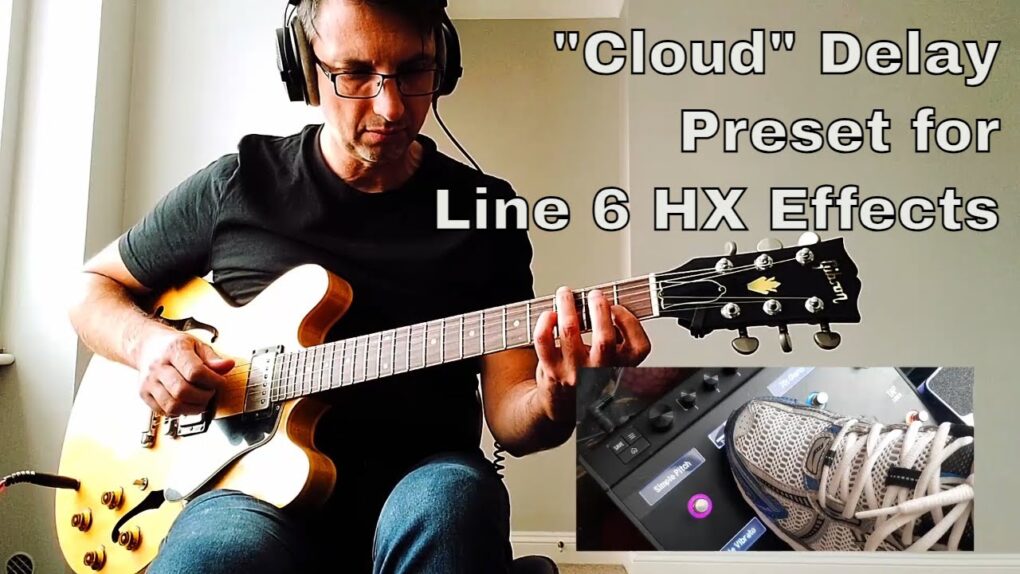
“Cloud” Delay Preset Line 6 HX Effects+Momentary Footswitch

link to my Line 6 community presets page: https://line6.com/customtone/profile/gianchiar

Hey guys, today I wanted to share some cool presets for the HX effects that I uploaded to the Line 6 Community. These presets were inspired by some gigs I played with a singer-songwriter in the UK, and they feature grungy fuzz and overdriven guitar sounds.

One particular sound I was trying to recreate was a unique Reverb effect called the Cadavenous by Blackout Effectors. It has this cool hold or freeze effect, but I couldn’t find the exact pedal online. So, I tried using the Cosmos Echo and the Line 6 to get a similar sound, and it worked quite well.

Here’s how I set it up in HX Edit:

Cosmos Echo on a quarter note with a ramp of 7.1.
Feedback controlled by a latching footswitch, which automatically sets the feedback to 58 when engaged and 26 when released.
I found that this feedback level worked best to avoid overwhelming volume when playing live. It’s a simple setup, but it sounds great, and I’m planning to upload these presets to my page on the Line 6 Community for HX effects and the Stomp XL.

I hope you find these presets helpful! Share them with others and let me know if you have any questions.

Unleashing the Power of Pentatonic: Creative Approaches and Versatility

Today, I want to take a moment to explore the timeless and indispensable concept of pentatonic scales. As guitarists, we all begin our musical journey with the Old Faithful pentatonic shape. It’s the go-to scale for rock and the starting point for improvisation. However, there’s another pentatonic shape that I believe is equally essential, and it offers even more creative possibilities.

Now, let’s introduce the “1-3-1-3 Slide” pentatonic shape. This unique pattern consists of five notes played on two strings and then repeated one octave higher on the lower and higher strings. Starting from the flat seven of a minor scale, the pattern goes 1-3-1-3, and you’ll quickly recognize this iconic sound from guitar legends like Eric Clapton. This shape, with its sliding motion, brings a bluesy and expressive quality to your playing.

You’ll notice that this shape offers a lot of freedom for rhythmic variations, making it ideal for blues and funk-inspired playing. For different tonalities, you can easily switch to major by moving three frets down from the root, playing the major pentatonic shape. It has a bright and soulful vibe, perfect for infusing a Clapton-esque sound into your guitar solos.

Next, let’s explore how we can alter the pentatonic scale by changing some of the notes, creating new and exciting variations. For example, the “Jog” pentatonic involves replacing the minor third with the major third. This modification results in a more ’60s-jazz-inspired sound. Here’s how it sounds in action:

This variation opens up a world of musical possibilities, and you can confidently apply it in different contexts to add a fresh touch to your solos.

Another intriguing alteration is the “Flat 7 to Flat 6” pentatonic, where you lower the flat seven to the flat six, providing a funky and soulful flavor. This shape pairs well with dominant chords, like E7 or minor 13 chords, and creates a funky Prince-like atmosphere. Let’s hear it in action:

The “Flat 7 to Flat 6” pentatonic offers rhythmic flexibility and is perfect for those looking to infuse funk and blues into their playing.

By experimenting with these various pentatonic shapes and incorporating them into your playing, you’ll notice a significant expansion in your musical expression. Remember, the beauty of pentatonic scales lies in their simplicity and versatility, allowing you to effortlessly move between different styles and tonalities.

So, take some time to explore these creative approaches, and don’t be afraid to mix and match them in your solos. As you progress on your guitar journey, you’ll find yourself confidently navigating these captivating pentatonic shapes and creating your own unique musical voice.

For more in-depth lessons and personalized guidance, feel free to reach out to me. Until then, keep practicing, keep exploring, and let your guitar sing with the power of pentatonic! Don’t forget to subscribe and share this video with your fellow guitarists. Happy playing, and take care!